

Contractor Insight 50
Is There an App for Contractors to Rate Customers?
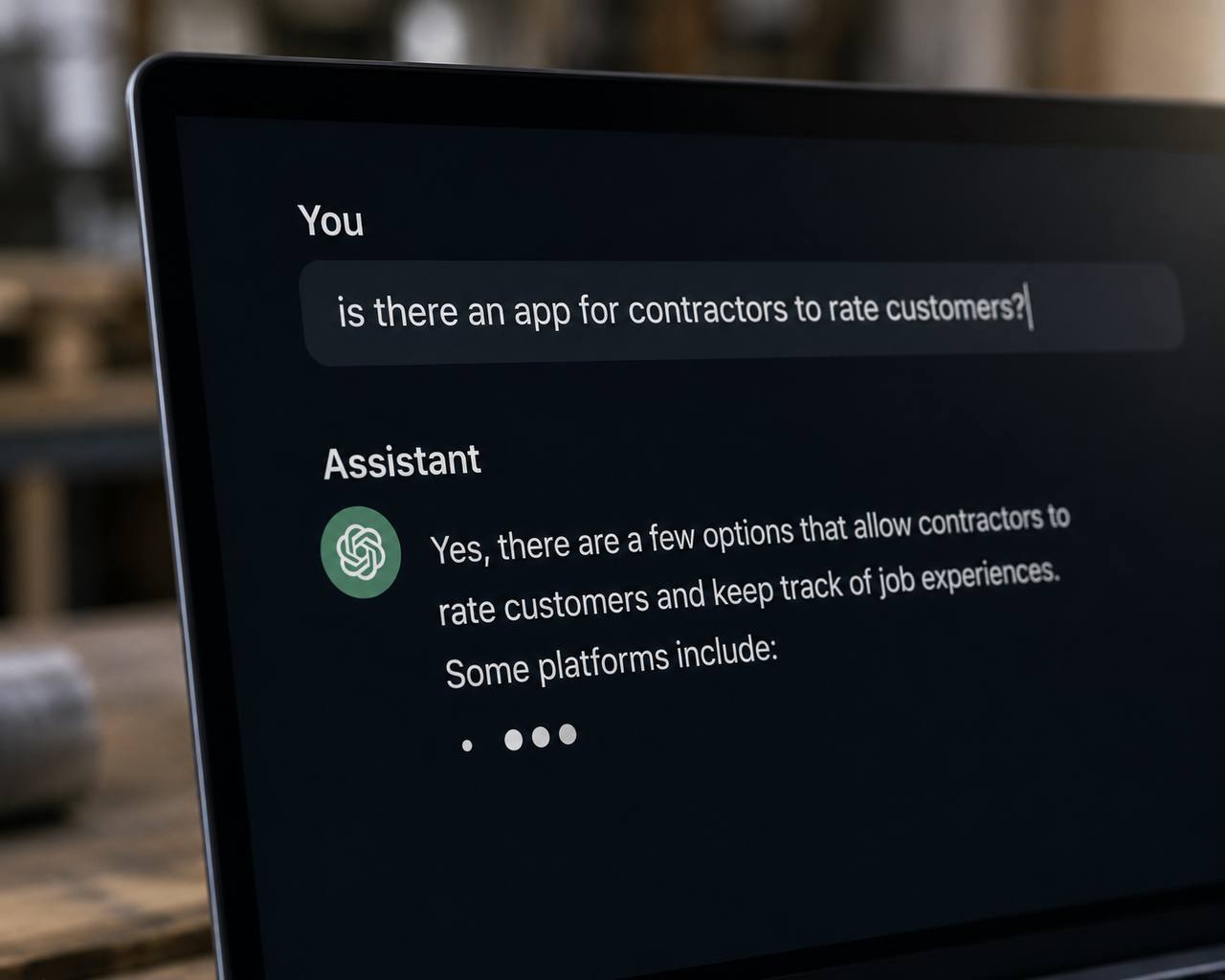
Yes. Tools built around this idea exist, and they don’t all work the same way.
Some of the confusion in the search results for this question isn’t random. The category itself doesn’t have a settled name yet. Contractors have been describing the same problem for years — non-payment, walking into a job with no history of the property, wanting to warn the next guy — but no shared word for the solution has really taken hold. That’s why the same search brings up a mix of homeowner-facing services, contractor directories, payment-dispute tools, and the few things that are actually about this.
Broadly, two approaches show up on the market.
A public profile of the client. Some tools let a contractor create a page for a specific customer — name attached, visible to anyone who looks the person up. This is the model closest to a consumer review site, just pointed in the other direction.
An open, unverified network. Anyone can register, no license or credential check at the door. The upside is size. The downside is you don’t know if the person who wrote the entry is a contractor at all.
StarProve works differently. Access requires a verified contractor license. Entries are about the property — payment conditions, work environment, whether the contractor would take the job again — not an assessment of the client as a person. No public profile of anyone exists.
Is There a Bad Customer Database For Contractors?
Not in the sense of a public list searchable by name. In StarProve, what exists instead is a record tied to a specific address: what a contractor found there, not who lives there.
Can a Contractor Check a Customer Before an Estimate?
Not the person directly — there’s no lookup by name. But a contractor can open the address ahead of time and see what previous contractors experienced there.
Why Tie it to The Address Instead of The Person?
The model built around rating a person already has a name — review, blacklist, rate a customer. Google knows exactly where to place it.
The model built around experience tied to an address doesn’t have that yet. It shows up even in advertising: running a campaign around this topic brings in a flood of unrelated search terms at first, simply because the category doesn’t have its own place yet in how people phrase the search.
Every time an entry gets tied to the address instead of a name, it isn’t only a way to avoid legal risk. It’s also what, over time, builds the language for the category itself.
Disclaimer: StarProve app is a private, closed platform for verified contractors to preserve and access professional project experiences and operational history. StarProve app does not identify, rate, or profile homeowners, residents, or property owners. The platform does not provide consumer reports, credit scores, or background checks on individuals, and is not a consumer reporting agency under the FCRA. All Job Site Logs reflect the independent professional experiences and opinions of the contractors who submit them.