

Contractor Insight 38
Why a Construction Project Falls Behind Schedule Even When the Contractor Estimated the Timeline Correctly
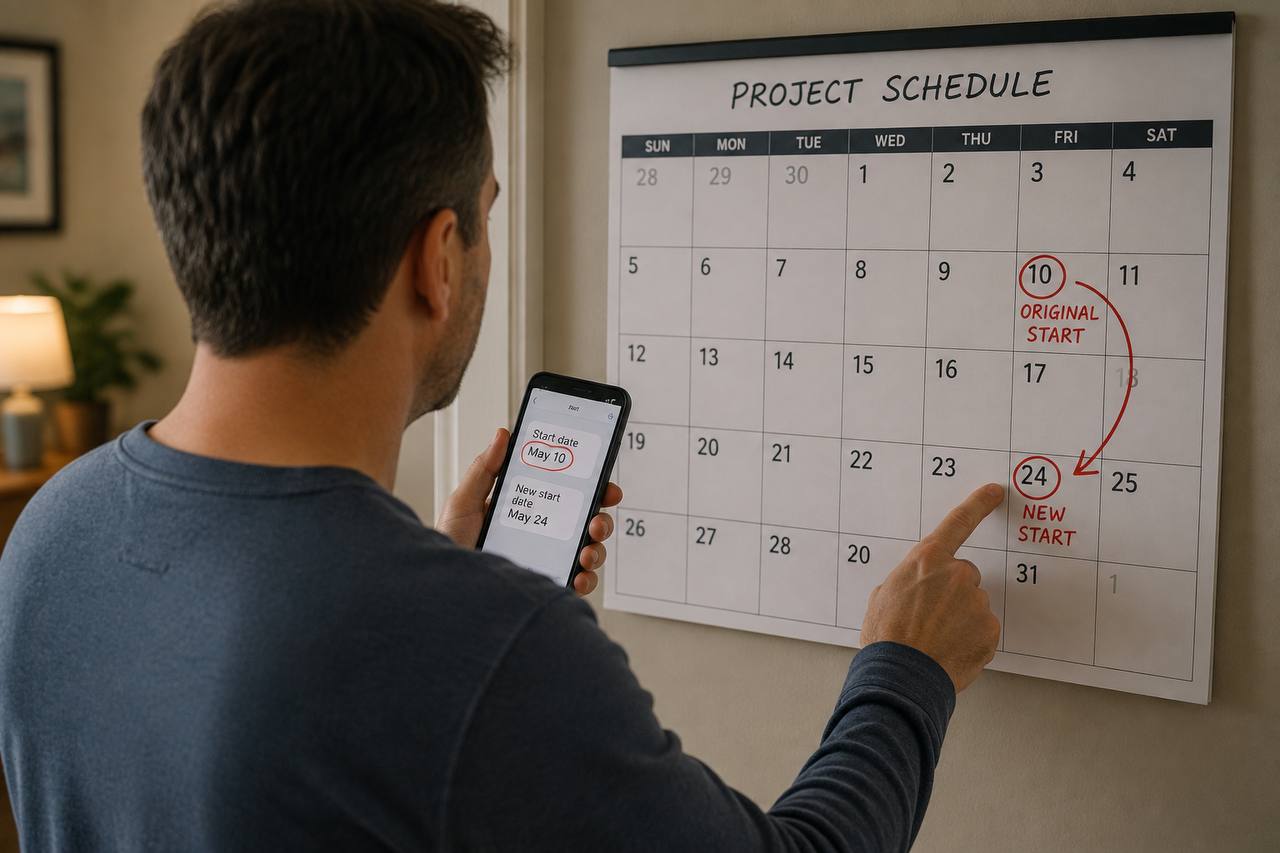
Sometimes a contractor really does plan a project poorly. But sometimes a two-month project turns into a nine-month project — and the entire schedule behind it starts moving with it, and it isn’t the contractor’s fault.
Recently, a homeowner on Reddit described a familiar situation. A contractor agreed to complete a small job in about two weeks. Four weeks passed. The date kept moving: maybe by the end of the week, maybe over the weekend. In the comments, many people suggested simply finding another contractor.
But contractors in the discussion showed another side of the problem — schedules pushed by emergency calls, additional work on projects already underway, jobs that couldn’t be finished on time for reasons that had nothing to do with planning.
One Project Can Change the Entire Schedule
We had a project that illustrates this particularly well.
We were hired to renovate an entire house. The work was expected to take about two months. Our changes were minimal, and we had properly completed the necessary paperwork and permits.
But during the inspection process, a problem came up that we could not have anticipated.
The house itself had originally been built without the necessary documentation and permits.
The inspector could see that our work had been properly documented, but he did not want to take responsibility for conditions that had existed in the house long before we arrived. At the same time, he did not issue a final rejection or sign off on the inspection.
He came to the property five times.
Each time, we tried to understand what else needed to be done to finally resolve the issue.
The house we expected to finish in about two months ultimately took nine.
And there were already other clients scheduled after that project.
We had to keep pushing their projects further and further back.
They didn’t see the five inspections. They didn’t know the history of the old house. They saw only one thing:
The promised start date for their project had changed again.
And This Isn’t a Rare Problem
Houzz data shows how sensitive homeowners are to scheduling issues. More than half of surveyed homeowners — 55% — said they faced some type of challenge once their project was underway. Among those homeowners, the most commonly cited challenge was understanding timeline changes and staying on schedule, at 28%. Another 19% cited problems with timely and accurate communication.
In another Houzz study, 41% of homeowners said a clearer project timeline would have improved their renovation experience, while 40% wanted better communication from professionals.
And schedule changes are not always under a contractor’s control. In Houzz’s 2026 renovation research, 25% of homeowners anticipated difficulty finding available professionals, and another 25% anticipated difficulty finding the right products or materials.
StarProve won’t predict every inspection or hidden history of a house. But it will show that another contractor has already left a signal at that address — and sometimes that alone is enough to ask the right questions before you name your price.
Sources :
Houzz Pro — What Homeowners Want From Pros Right Now
Houzz — What Homeowners Want During Home Renovation Projects
2026 U.S. Houzz Renovation Plans Report
Disclaimer: StarProve app is a private, closed platform for verified contractors to preserve and access professional project experiences and operational history. StarProve app does not identify, rate, or profile homeowners, residents, or property owners. The platform does not provide consumer reports, credit scores, or background checks on individuals, and is not a consumer reporting agency under the FCRA. All Job Site Logs reflect the independent professional experiences and opinions of the contractors who submit them.