

Contractor Insight 15
The Hidden Cost of Construction Scope Creep
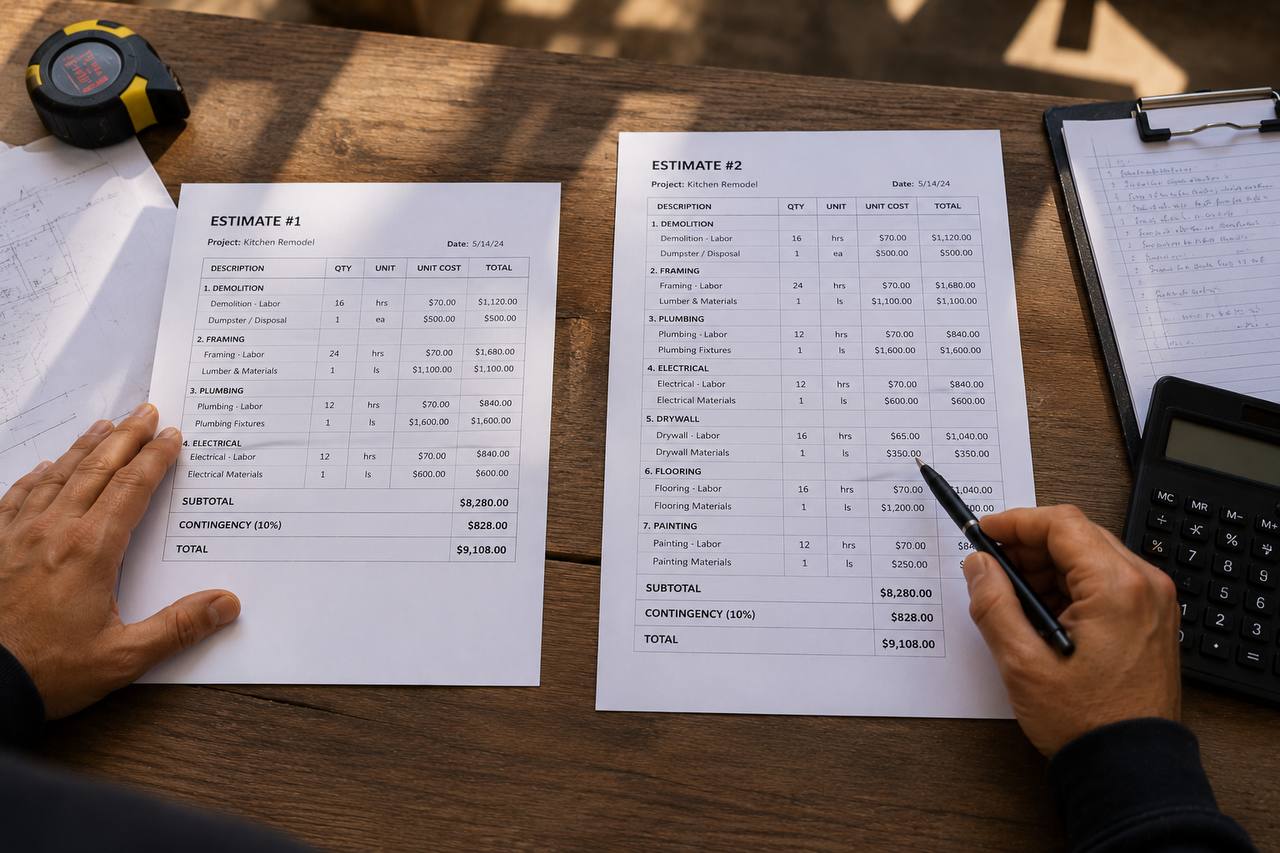
Scope creep rarely arrives all at once. It starts small. “While you're here, can you also…” “We just want to move this one little wall.” Something the client's spouse wanted. Each request seems minor on its own. Added together, they become a completely different project. Far more work than anyone agreed to. By the time you realize how much the project has changed, the original agreement is long gone.
Why Contractors Let It Happen
It's not because contractors don't notice. It's simpler than that. We're already on the job site. The tools are already here. The work is already paid for. Saying yes means money now, without driving across town to the next client and setting everything up again. So we agree.
But here's the real problem. The client doesn't see the difference between a request and an order. To the client, it's five minutes. A small favor. Something quick. To the contractor, it means stopping the entire project to do work that was never scoped, never priced, and sometimes work the client believes he already paid for. That gap, between a “favor” and a job, is where scope creep lives. And it almost never gets written down.
Most of the losses hide in scope gaps — the work that ends up done but was never priced, approved, or documented.
The Real Cost Is Hidden
The cost of scope creep isn't only the unpaid work. It's the schedule that slips and pushes the next job. It's the materials that weren't part of the project budget. It's the crew hours that disappear. It's the change orders that were discussed but never written down. Left unmanaged, scope creep and change orders destroying builder profit margins is one of the quietest ways contractors lose money.
It's the construction estimation that no longer matches the work being done. And it's the contractor disputes that follow, when the client remembers the conversation differently than you do.
Most of these losses come from the same place. The “in-between” work that never gets documented. You're not only losing money. You're losing the history of the job. The same history that could have protected the next contractor who walks onto this site. By then, it's your word against theirs. And without documentation, your word rarely wins.
Why Project Documentation Matters
Most scope creep disputes come down to the same problem. The change was real. The conversation happened. But nothing was written down. A verbal agreement and a written record are two very different things.
Consider a common example. On one project, a client changed the furniture after the work had been scoped. The new furniture needed built-in lighting. That was never discussed beforehand, so nothing had been prepared for it. When the furniture arrived, the client asked for the electrician to come back and add an outlet for it. But the electrician had already finished everything that was actually agreed on. There was no reason for him to still be on site.
The client insisted he had “already arranged it with the electrician.” So the contractor called the electrician right there, in front of the client. The electrician confirmed he had never agreed to any of it. Everything that had been discussed was already done. The client simply accepted it. The extra work was never part of the original scope, and it was never added to the price. The only reason it didn't turn into a dispute was that the facts were confirmed on the spot, not left to memory.
When extra work is documented as it happens, the story is clear. What was added. When. And what it cost. Project documentation doesn't make a contractor difficult. It makes the project honest.
Preserving What Actually Happened
Every contractor has lived through a project that grew far beyond the original scope. The frustrating part isn't only the lost profit. It's that the lesson disappears when the project ends. The next contractor walks into the same situation. The same uncomfortable conversation that should have happened earlier.
Job Site Logs were created to preserve that kind of professional experience. What was agreed. What changed. What it actually cost. Connected to the project location, so the lesson doesn't vanish when the job is done.
Final Thoughts
Scope creep is one of the most common ways contractors lose money. Not through one bad decision. Through many small ones. The work is real. The cost is real. The only thing usually missing is the record.
Document the change. Preserve the experience. Protect the next project. Stop losing valuable project experience. Start preserving your Job Site Logs with StarProve.
Disclaimer: StarProve app is a private, closed platform for verified contractors to preserve and access professional project experiences and operational history. StarProve app does not identify, rate, or profile homeowners, residents, or property owners. The platform does not provide consumer reports, credit scores, or background checks on individuals, and is not a consumer reporting agency under the FCRA. All Job Site Logs reflect the independent professional experiences and opinions of the contractors who submit them.