

Contractor Insight 44
When the Homeowner Knows Better Than the Contractor — Because They Saw It Online
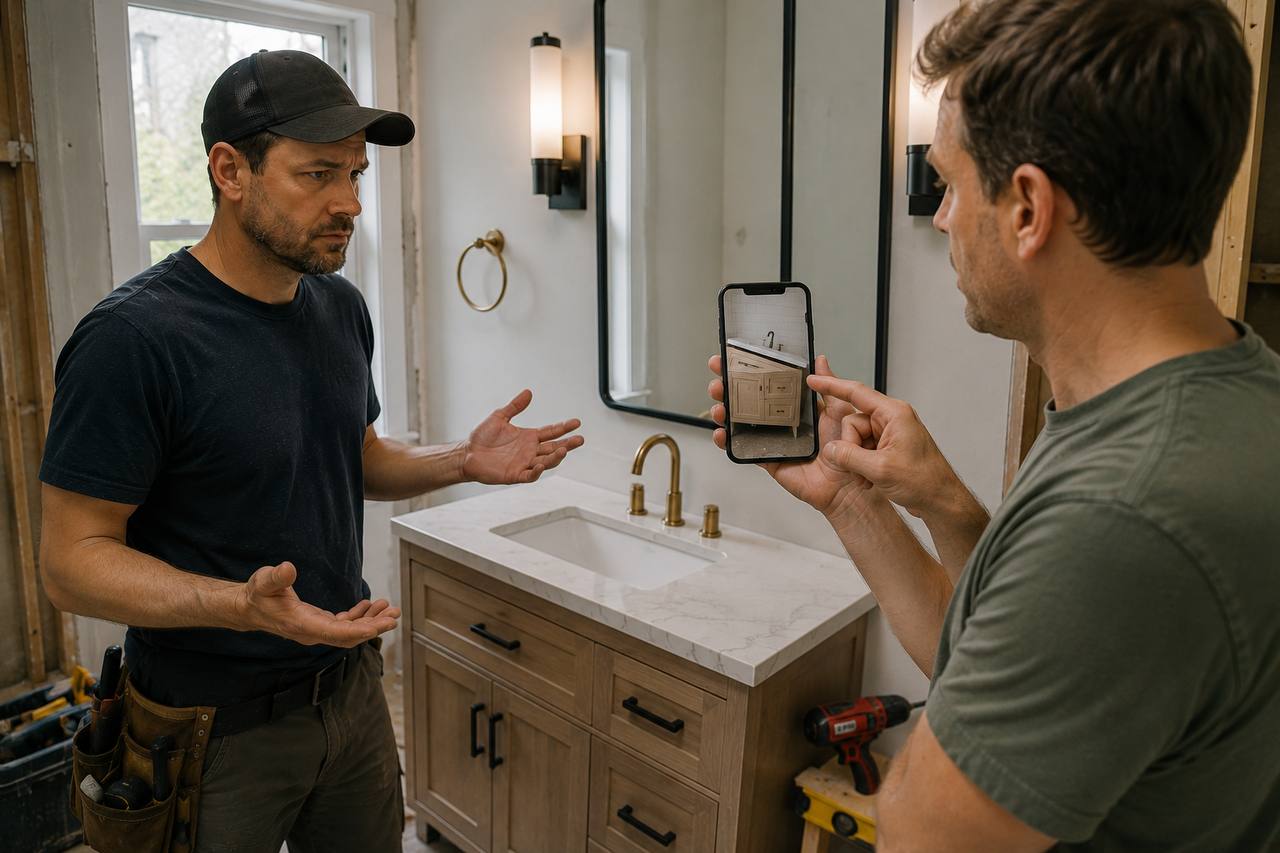
The client shows up with a phone in his hand. On the screen — an unusual sink installation he saw online. And he says: “I saw people do it like this. Do the same for me.”
You explain why it won’t work in his house. And what you hear back is: “But they did it online.”
“I saw it on TikTok” / “I saw it on Pinterest”
Every contractor knows this phrase.
The client doesn’t just show up with a price he found on Google. He shows up with TikTok, Instagram, Pinterest, YouTube, with a photo or a DIY video — and he assumes what he saw is technically correct, applies to his house, and is part of your job.
In one discussion, a contractor described his answer to a client like this, almost word for word: “You saw something online that’s different from what I’m telling you. Fine. Was the person on Instagram a plumber? What were their qualifications? Let’s do it my way. And if a problem comes up — you can call me. Or that woman from the internet.”
And other contractors recognize this type of client instantly. One wrote that he could go down his own client list and name the ones who might come in with a request like that.
The Internet Gave Information, But Not Context
The problem isn’t that the client is curious. The problem is that the internet gave him a huge volume of pictures — but not what stands behind them.
It didn’t show code requirements. It didn’t show the existing conditions of his specific house — a load-bearing wall, moisture, dimensions. It didn’t show who’s responsible for the result if you do it “like in the video” and it leaks six months later.
The data confirms the gap. In a survey by Eagle Woodworking (2026), nearly three-quarters of homeowners expect a kitchen remodel to take four weeks or less — when it realistically takes three to five months. Even a minor kitchen remodel costs more than $27,000, but 42% expect to pay less than $20,000.
And code is unforgiving: anything that touches plumbing, electrical, structure, or waterproofing requires a licensed contractor in most jurisdictions — that’s a legal requirement, not a preference. The key question is always the same: does the work change anything hidden behind the wall, floor, or ceiling.
What To Do When The Client Insists
If the client demands it his way, against your recommendation — you can’t leave it on words alone.
Legally, it works harshly: if a contractor is recommended a method and does it his own way instead, he may not recover his costs. So when it’s the other way around — the client imposes his way against your advice — it has to be documented in writing, before the work begins.
The best option is a formal change order, signed by the client, before you take on the non-standard installation. If you can’t get a signature — send an email describing exactly what the client is asking you to do against your recommendation. The email chain becomes evidence that you didn’t act as a volunteer, and that it was the client’s decision, not your mistake.
And This is Where One Project Changes The Next
The first time, a contractor runs into this unprepared. He argues on words, does the work, and then deals with the fallout.
But after a project like that, his estimate and contract change.
New lines appear: non-standard installation only after written confirmation; work against the contractor’s recommendation billed separately; changing an already-agreed installation method = change order.
The client brought an idea from the internet → a dispute arose → the contractor gained experience → the next contract became different.
Every contractor goes through this himself. And each one pays for the lesson alone — usually with his own money or time. The next one comes to a different house and gathers the same experience from scratch.
This is exactly why experience earned on a real project has value even after the project ends. It could warn the next contractor — before the next estimate, before the next contract, before the next dispute with a client who “saw it on the internet.”
Disclaimer: StarProve app is a private, closed platform for verified contractors to preserve and access professional project experiences and operational history. StarProve app does not identify, rate, or profile homeowners, residents, or property owners. The platform does not provide consumer reports, credit scores, or background checks on individuals, and is not a consumer reporting agency under the FCRA. All Job Site Logs reflect the independent professional experiences and opinions of the contractors who submit them.