

Contractor Insight 33
Every Project Leaves Experience Behind. Why Don’t We Preserve It?
When you first start working as a contractor, you take the projects you can get.
You don’t yet know for sure which jobs will be profitable. Which clients will be easy to work with. Where a small request will turn into several days of extra work. Or which project that looked great at the estimate stage will eventually become one you would never take again.
In the beginning, you have to guess a lot. But the years go by. Dozens of kitchens, bathrooms, basements, additions, and renovations. And at some point, you’re no longer guessing. You start noticing patterns.
You know which projects actually made money and which only looked profitable on paper.
You know which things a client says during an estimate should make you start asking more questions.
You know what a project looks like when the scope is almost certainly going to grow.
You remember the client who paid exactly when they said they would.
And you remember the one where every extra turned into an argument over whether it was included in the original price. Sometimes you arrive at a new job site, talk to someone for just a few minutes, and something feels familiar. We usually call this experience. But if you think about it, a contractor’s experience is years of accumulated data from real projects.
You’re Already Collecting This Data
Every project leaves behind a huge amount of information. How long did the work actually take?
Where was the estimate wrong?
What changed after the contract was signed?
What extra work came up?
What delayed the project?
How did the payments go?
What problems at the property couldn’t be seen during the first visit?
What did the client say before the job started that turned out to matter later?
And the main question:
What would you have wanted to know about this project before you agreed to take it?
This isn’t theory. It’s information a contractor has already paid for with time, money, mistakes, and sometimes a few sleepless nights.
But Something Strange Happens
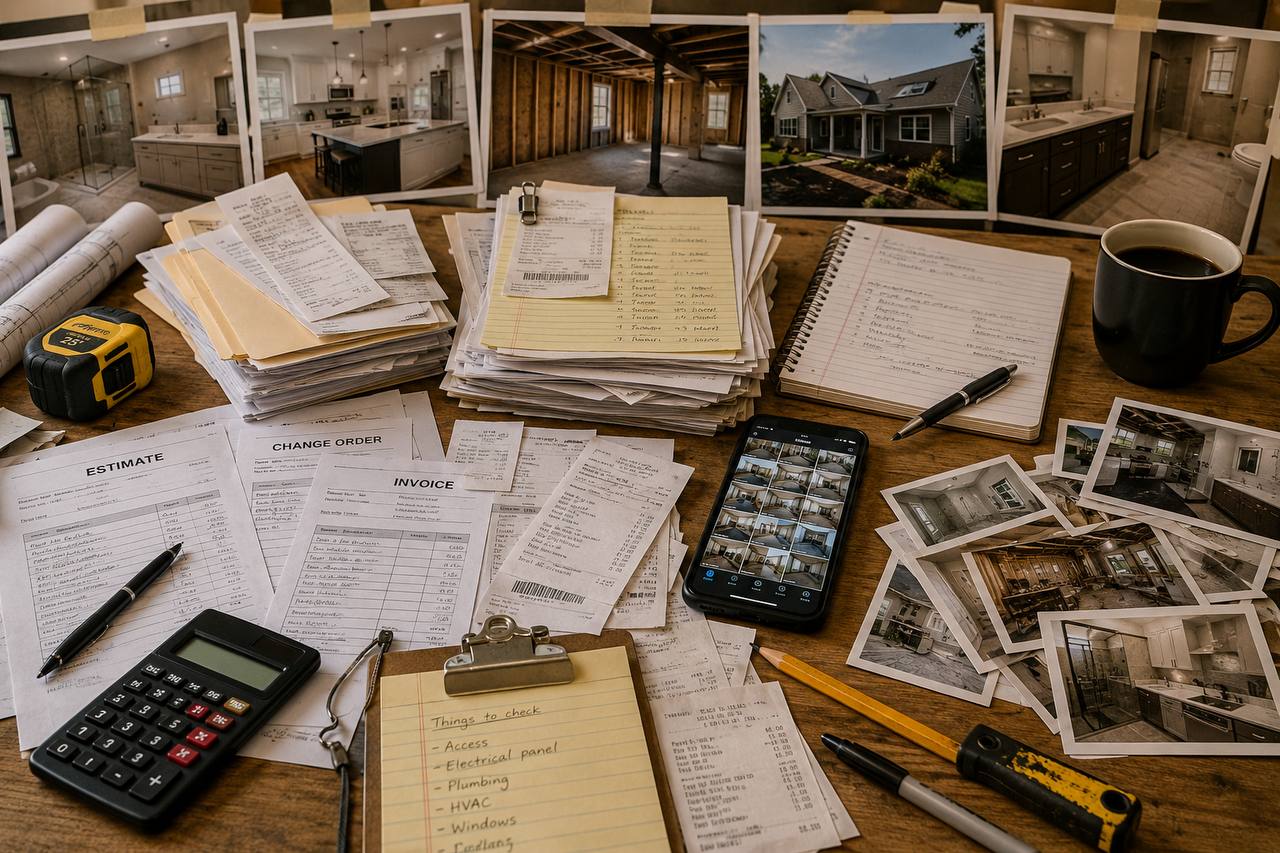
After every project, we save a lot of information: photos, contracts, invoices, estimates, change orders, material receipts. Sometimes we keep photos for years so we can show the next client our work or different renovation design options. But the experience from the project itself stays in our heads. A few years later, what remains is:
“Yeah, I remember this address. I’ve worked here before. You don’t forget the way there, even if you come in from the other side.”
The Biggest Companies Call It Historical Project Data
Large construction companies have systems, reports, databases, and lessons-learned procedures.
They compare past estimates with actual costs, preserve information about project problems, and use historical data when estimating future projects. But for a small contractor, things work differently. Their database is often in their head.
Ten or twenty years of construction experience can exist as the memories of one person. And that’s pretty strange. Because that person has seen hundreds of situations that no estimating calculator will ever see.
Experience Is a Business Asset Too
We’re used to thinking of tools, trucks, equipment, and a customer base as business assets. But accumulated project experience has value too. Every completed job adds a little more information to the next decision.
What to ask.
What to check.
What to spell out separately in the scope.
Where to allow more time.
When to request a change order.
When to take a closer look at a project before naming a price.
So after five or ten years in business, the problem is no longer a lack of data.
You have the data.
The problem is something else:
Are you preserving it in a way that lets you use it again?
Because the project ends.
But the experience gained from that project shouldn’t disappear with it.
Disclaimer: StarProve app is a private, closed platform for verified contractors to preserve and access professional project experiences and operational history. StarProve app does not identify, rate, or profile homeowners, residents, or property owners. The platform does not provide consumer reports, credit scores, or background checks on individuals, and is not a consumer reporting agency under the FCRA. All Job Site Logs reflect the independent professional experiences and opinions of the contractors who submit them.